Atlas 2027 Month-9 Steering Update
A 27-slide steering committee update on a four-terminal port transformation programme at month 9.
- Prepared for
- Atlas Terminals SteerCo
- Length
- 27 slides
- Made with
- Whyston, exported to PowerPoint
The brief, and what to look at
The brief
A port operator’s SteerCo needed a month-9 update: KPI progress, workstream status, benefits delivered and the decisions needed to stay on track.
What to look at
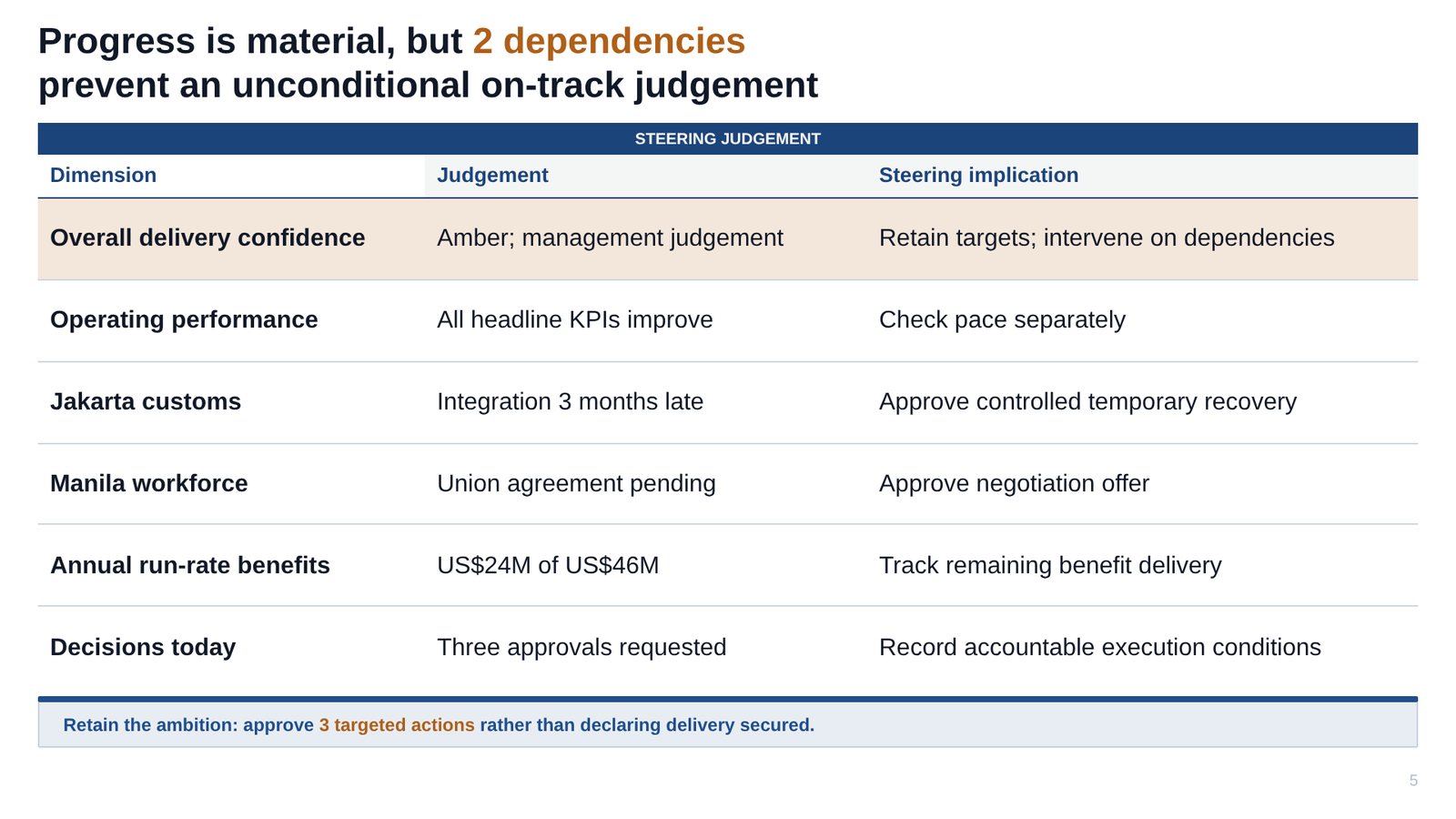
- An honest status line: progress is material, but two dependencies stop an “on track” verdict.
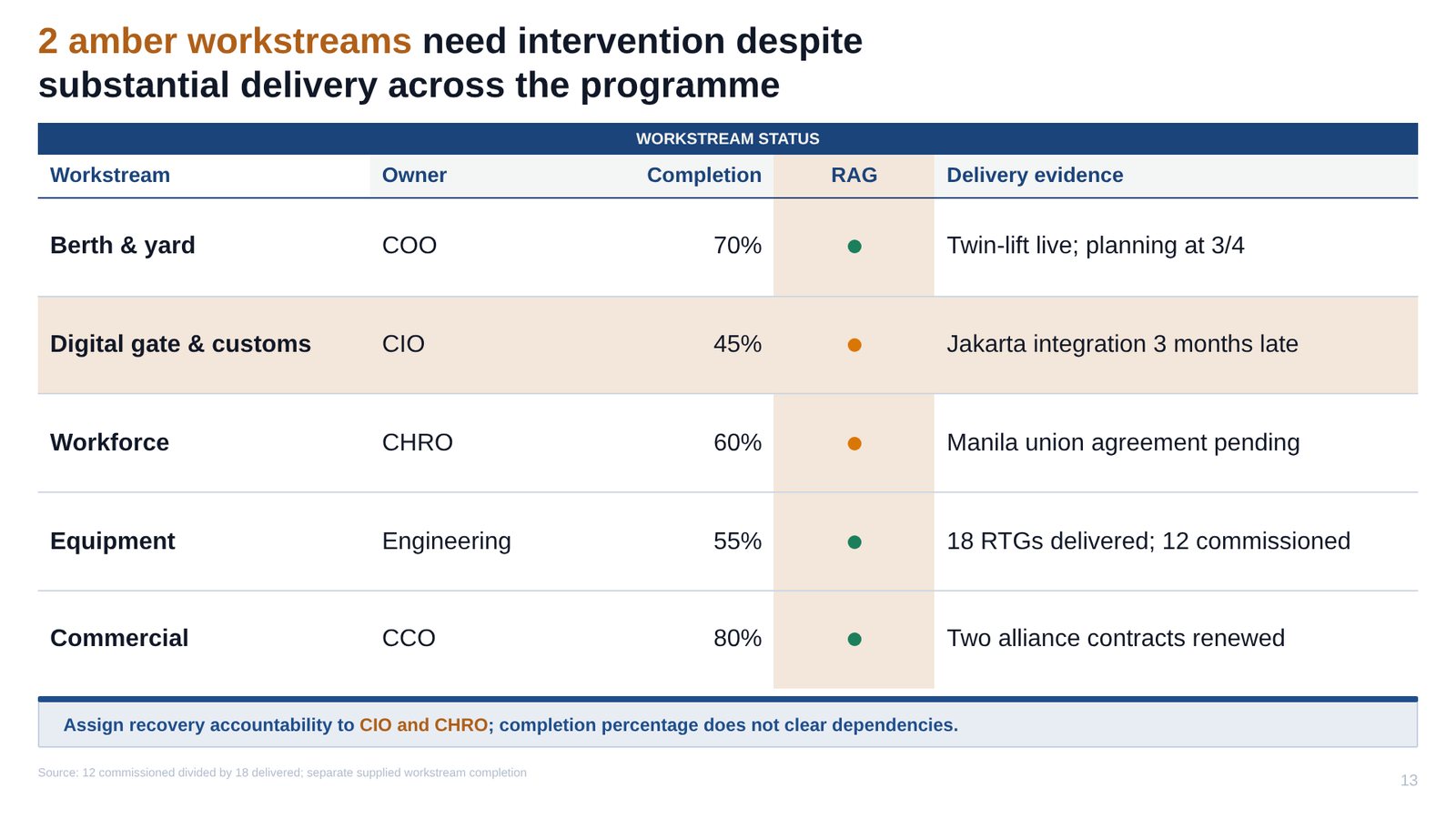
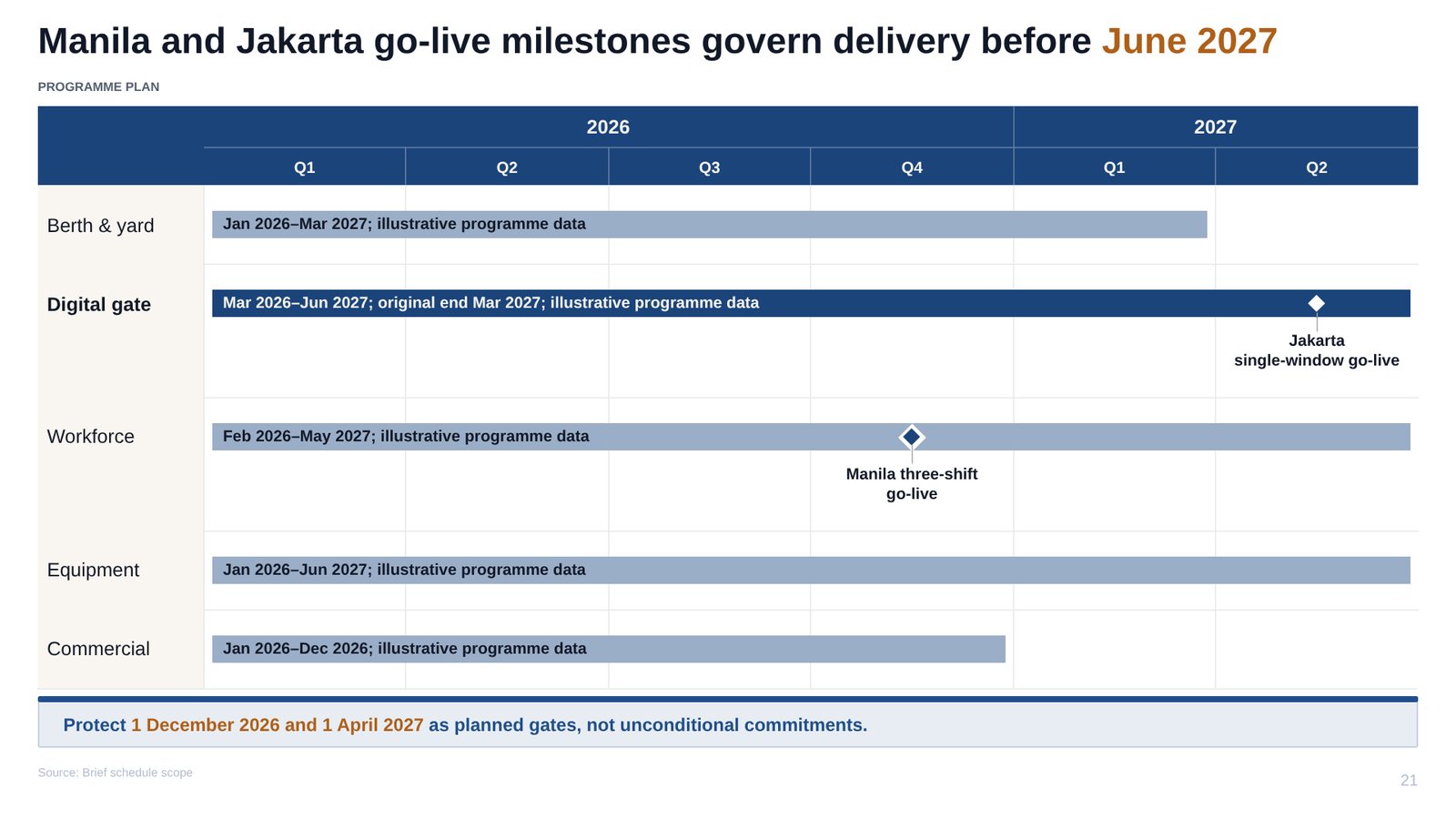
- A RAG workstream table and a Gantt show where delivery is slipping and why.
- Three approvals are framed as decisions with owners, conditions and dates.
The executive summary
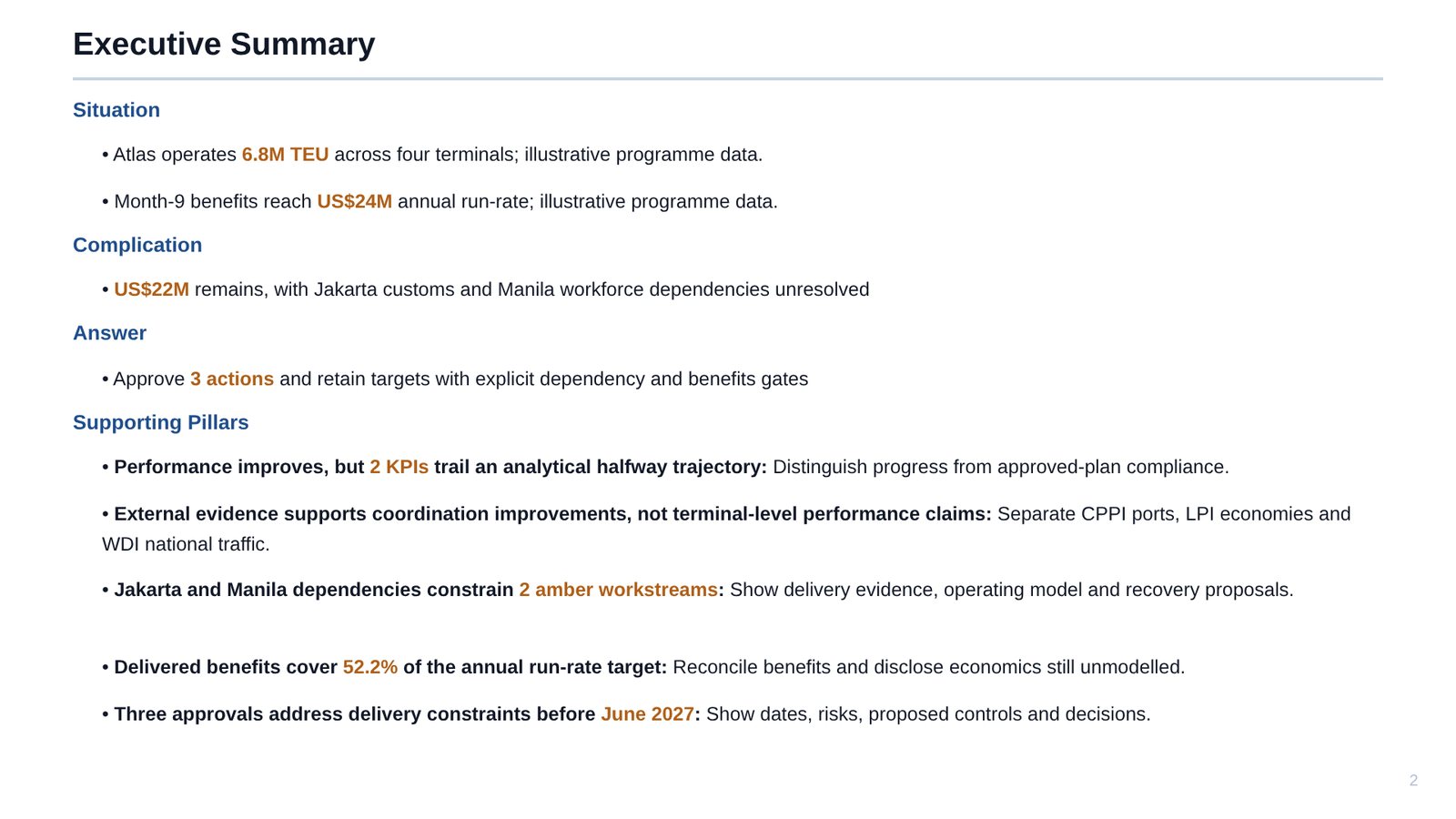
Written in SCQA order: the situation, what complicates it, the answer, then the pillars the rest of the deck proves.
- Situation
Atlas operates 6.8M TEU across four terminals; illustrative programme data.
Month-9 benefits reach US$24M annual run-rate; illustrative programme data.
- Complication
US$22M remains, with Jakarta customs and Manila workforce dependencies unresolved
- Answer
Approve 3 actions and retain targets with explicit dependency and benefits gates
- Supporting pillars
- Performance improves, but 2 KPIs trail an analytical halfway trajectory
- External evidence supports coordination improvements, not terminal-level performance claims
- Jakarta and Manila dependencies constrain 2 amber workstreams
- Delivered benefits cover 52.2% of the annual run-rate target
- Three approvals address delivery constraints before June 2027
The storyline, title by title
Every slide title in the deck, in order. Each one is a full-sentence claim, so the titles alone tell the story.
Status and Pace
All headline KPIs improve. Dwell and opex lag a clearly labelled analytical halfway reference, not an approved interim plan.
- Progress is material, but 2 dependencies prevent an unconditional on-track judgement
- All 5 headline KPIs improve; dwell and cost still need acceleration
- Dwell and opex trail the analytical halfway reference; margin meets it
External Performance Context
CPPI port ranks and LPI economy indicators provide directional context. They do not measure the fictional Atlas terminals.
- Cai Mep and Haiphong rank 11th and 13th; Manila ranks 350th
- Atlas’s 3.0-day dwell target remains above Singapore’s 2.1-day economy mean
- External evidence supports coordination improvements; ICTSI financial parity remains unassessed
Execution and Dependencies
Operational changes are live, but customs integration and workforce agreement remain unresolved. Proposed mitigation must stay distinct from confirmed delivery.
- 2 amber workstreams need intervention despite substantial delivery across the programme
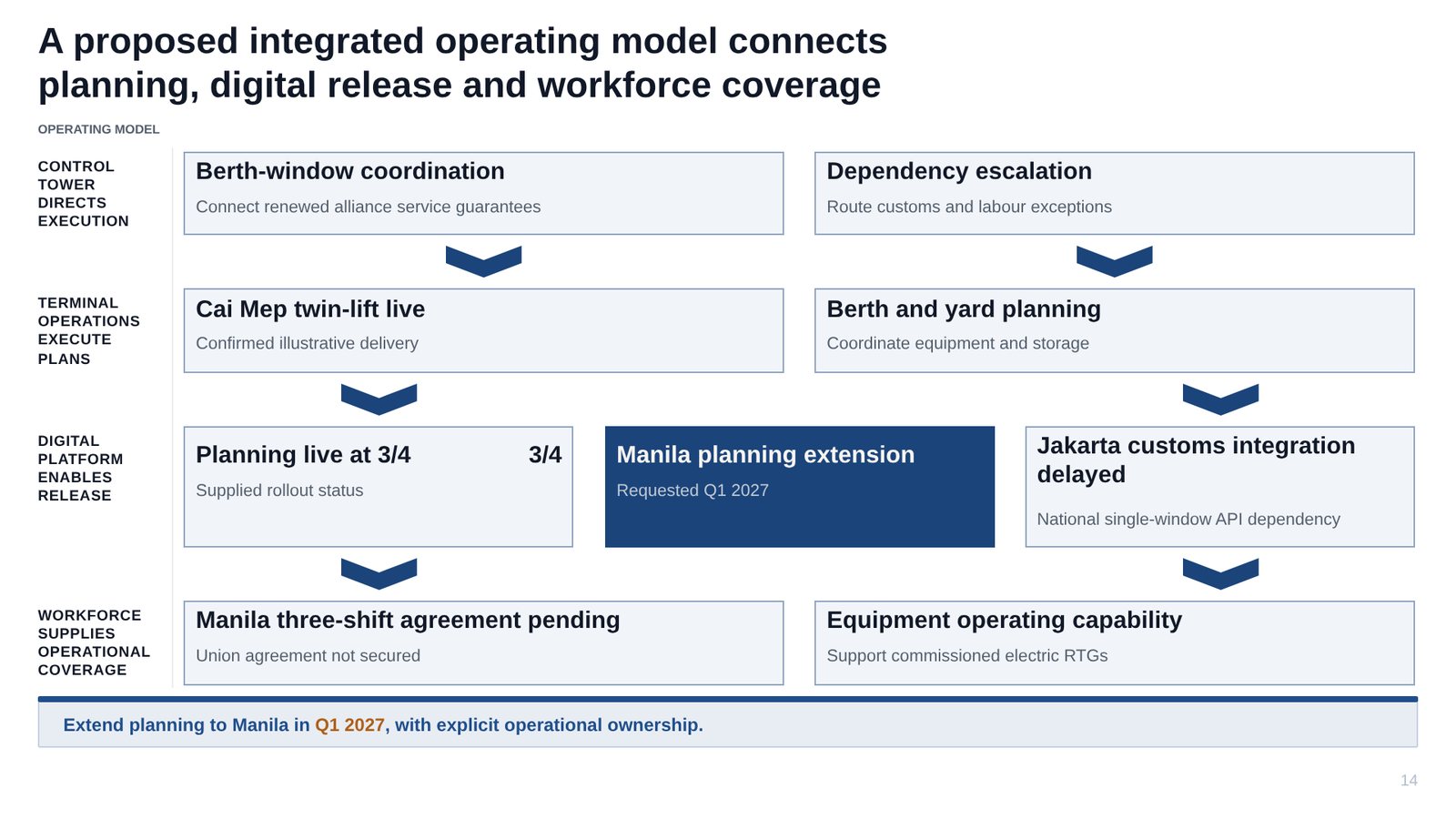
- A proposed integrated operating model connects planning, digital release and workforce coverage
- Jakarta’s 3-month customs integration delay requires a controlled temporary workaround
- Manila’s 6% shift-premium offer needs union agreement before planned go-live
Benefits and Attribution
Annual run-rate benefits reconcile to US$24M against US$46M. The remaining gap is not allocated to workstreams and is not cumulative cash.
- US$24M annual run-rate benefits leave US$22M still to deliver
- Cai Mep’s twin-lift deployment is live; 14.6% productivity uplift remains programme-level
Delivery and Approvals
Planned milestones depend on agreement, authorisation and readiness. Today’s approvals should authorise controlled action without prematurely clearing amber gates.
- Manila and Jakarta go-live milestones govern delivery before June 2027
- Approvals reduce constraints, but funding sufficiency and benefit attribution remain unproven
- Approve 3 actions with explicit funding, agreement and readiness conditions
- Approve 3 actions and hold owners accountable for dependency clearance
The company at the centre of this deck is fictional, and figures marked illustrative in the deck are made up for the example. Public figures come from the sources listed on the deck’s Figures & Assumptions pages, which Whyston adds to every deck.